Table Of Content
Hamias is the founder of California-based Milano Granite, which helps explain the profusion of luxe marble and other stone finishes seen throughout in the listing photos. Contemporary homes in Los Angeles may reflect Modern architectural influences, but they deviate and incorporate the latest technology, construction materials, and style trends. Think of these borrowed architectural elements as music samples that form the underlying parts of a hip-hop music track, resulting in a brand new song with familiar beats and melodies. Second, for the first time in American history, a burgeoning middle class was on the move. An increase in automobile ownership, the construction of freeways and the continued suppression of streetcars (especially in Los Angeles) led many to accept the idea of commuting - sometimes long distances - to and from work.
Question Time: Weekly News Quiz
Journals and books would disseminate new ways of living and building that were influential in Bombay and all over India. Cement companies would be at the forefront, disseminating products by publicising notable examples of architecture built every year. It is this ‘new architecture’ that has retrospectively been labelled ‘Art Deco’. This non-monumental, functionalist architecture for contemporary needs defined the urban image of the emerging metropolis.
A Bandra Apartment That Bridges Traditional and Modern Design
The skyline, turrets, pointed arches, and eccentric ground plan are close to classical Indian palace architecture. Challenges in preserving modernist houses in Bombay include balancing conservation with the need for adaptation, addressing maintenance issues, and navigating regulatory hurdles. MF Husain is perhaps one of India's most recognised artists, both in India and internationally. Largely self-taught, he started his career in Bombay painting cinema posters and designing furniture and toys.
Tips for Designing a Home Office With Masculine Décor
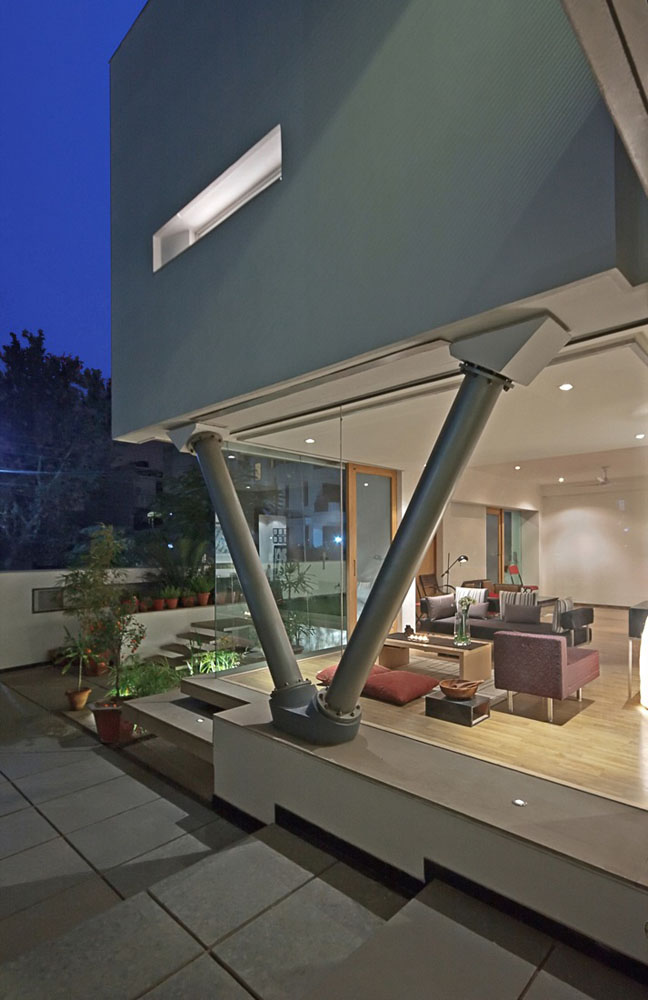
Modernist houses differ from traditional architectural styles in several key aspects. While traditional styles often prioritize ornamentation, symmetry, and historical references, modernist houses embrace simplicity, functionality, and minimalism. Traditional houses may feature intricate detailing, pitched roofs, and small windows, whereas modernist houses tend to have flat roofs, clean lines, and expansive windows to maximize natural light. Additionally, modernist houses often blur the boundaries between indoor and outdoor spaces, creating a sense of fluidity and connection with the surrounding environment. Bombay, now known as Mumbai, stands as a melting pot of architectural styles, reflecting its dynamic past and evolving present.
ARCHITECTURAL FIRMS
Tour a Dreamy Mumbai Apartment with Waterfront Views - Architectural Digest
Tour a Dreamy Mumbai Apartment with Waterfront Views.
Posted: Mon, 17 Jan 2022 08:00:00 GMT [source]
Land being at a premium, despite the emergence of new northern suburbs and the vast schemes that were the result of the City Improvement Trust, meant that the apartment block became the preferred choice of affluent urban habitation. Domestic architecture in Bombay that would emerge in the early twentieth century would exemplify this typology. This paper traces the development of Bombay’s architecture in the 1930s and 1940s by an analysis of various published writings and texts from the same period.
They provided for the lower middle class at reasonable rents and maintained open spaces and other facilities within their boundaries. Set atop the Linda Vista hills in Pasadena, this 3.3-acre lot houses not one but two architecturally significant homes on the same site, offering far-reaching views to both ocean and mountains. As well as a 1954 house by Thornton Ladd of Pasadena firm Ladd & Kelsey, there’s also an impressive custom home by A.Quincy Jones. The latter extends to 6,500 square feet, with angular glass roofs topping out soaring living spaces. Classic modernist elements include an indoor-outdoor koi pond and multiple courtyards and atriums in this finest of mid-century bungalows. Art Deco architecture in Mumbai developed during the 1930s and produced distinctly angular shaped buildings with facades.
Art and design exhibitions
Materials such as concrete, glass, and steel are commonly used, lending a sense of modernity and sophistication to these architectural marvels. At the heart of Modernist Houses in Bombay lies a commitment to clean lines and geometric forms. These homes often feature flat roofs, floor-to-ceiling windows, and an emphasis on open floor plans to create a sense of fluidity and openness.
Enjoy a collection of fascinating, historic pieces of Los Angeles architecture that were built as private residences. It was once called the ‘theatre-de-luxe of the East', a shining jewel in ‘Bombay the Beautiful'—the urbs prima of India. On 21 October, nearly a century to the day it first opened, and more than two decades after it closed its gracious doors, the Royal Opera House, restored by conservation architect Abha Narain Lambah, reverberated once again with the sound of music. As London-based soprano Patricia Rozario took the stage, she knew well the historic import of the moment.
Many people innocently use the terms Contemporary and Modern interchangeably. However, the terms Modern and Mid Century Modern refer to historical periods whereas Contemporary describes the style of homes built today. From an exhibition in a 1940s-era Modernist house to a blood-red sofa, the highlights of Milan’s annual design fair. Akbar Padamsee was a student at Bombay's influential Sir J.J. School of Art when the Progressive Artists Group was formed. His intellectual exploration of the self and the nature of art has significantly influenced his works.
These companies had well organised publicity departments that released brochures and ‘folders’ that compiled photographs of newly finished buildings, both domestic and public, from the major cities and princely states in India. These buildings are significant because they define an urban rather than a monumental scale and display a functional purpose creating neighbourhoods and business precincts in the metropolis. As a collective, these buildings, interwoven within the older areas of the city and providing newer edges to it, created a fresh urban fabric that united the city visually, giving a sense of place to its inhabitants. It is the same fabric that defines a large part of the city today, having been in continuous use since the early 1930s. You've seen this iconic mid-century house and its view countless times in films, advertisements, and magazines.
The architecture that came up around that time was unique in the sense that it was “… not imposed on the city by a government, as was the case with the Neo-Gothic, but was embraced by the citizens.” (Pal, 1997, p. 14). These would include new office buildings, cinema houses and various types of domestic architecture. Some of the wealthier Indian clients, like Rajab Ali Patel, even built apartment blocks to rent out to Englishmen who had settled in Bombay to make their lives and careers.
They serve as tangible reminders of Bombay’s transformation into a global metropolis and its enduring legacy as a hub of innovation and creativity. Just as the minority of Indian architects were beginning to work on the enormous challenges of construction that lay ahead of them, the old debate on what the postcolonial approach to design should be, erupted again – modern, colonial, or Indian? Nationalism, a widespread sentiment at the time, led the people to reject anything that was perceived as foreign and anti-national, including the building styles born from the colonial era.
The popularity of Hollywood films did much to promote Art Deco to an international audience worldwide. The Taj Mahal Palace hotel resort was commissioned by Tata and first opened its doors to guests on 16 December 1903. The cost of construction was £250,000 (£127 million today).[15] During World War I, the hotel was converted into a 600-bed hospital.
Evidence indicates that Khotachiwadi started developing as an urban form before Bombay became a city. Then, a century after the Portuguese arrived, they gave Bombay away to the British as part of a dowry gift to Charles II of England. A walk though Khotachiwadi village will transport you back in time to relive this part of Mumbai's history. Colonialism has played a huge instrumental role in the formation of civilizations in modern times. As a result of this, there is an architectural similarity between the habitat of the colonizers and that of the colonized people.
The valance above the curtains now bears their family's crest and they are happy to be restoring to former glory one of the cultural icons that made this city ‘Bombay the Beautiful'. "I think the biggest thing that stood out to me was the architecture of the home because mid-century modern homes are so rare for the area," she said. "We looked past how bad it was because we knew that we could really transform it ourselves. This house has so much potential and we felt very special to be the people to see that."
The Modernist House Bombay is more than just a residence – it’s a work of art, a testament to human ingenuity, and a beacon of hope for a sustainable future. Its timeless design, functional elegance, and commitment to sustainability make it a true architectural masterpiece that will continue to inspire and captivate for years to come. So the next time you find yourself in Bombay, take a moment to admire this modern marvel – you won’t be disappointed.


No comments:
Post a Comment